
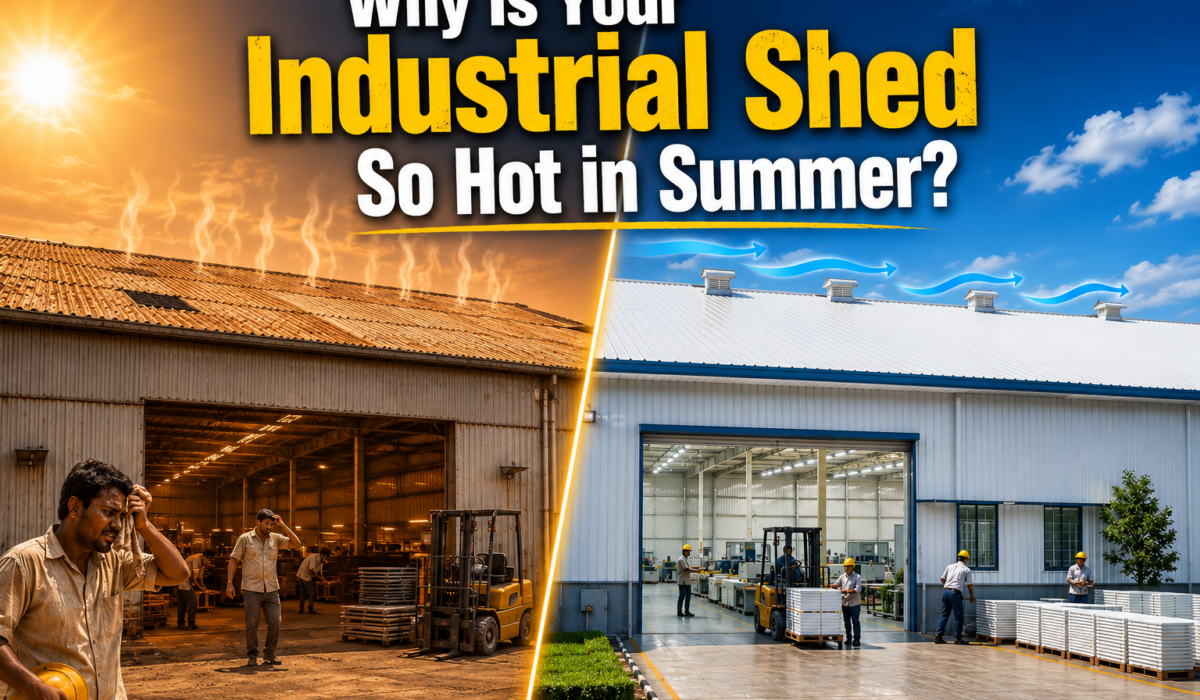
If your industrial shed feels like an oven during summer, you’re not alone. Excessive indoor heat is one of the biggest challenges faced by manufacturing plants, warehouses, workshops, logistics centers, and food processing facilities across India.
A hot working environment doesn’t just affect employee comfort—it can reduce productivity, increase cooling costs, impact equipment performance, and even compromise product quality in temperature-sensitive industries.
The good news is that excessive heat isn’t inevitable. In many cases, it can be significantly reduced with the right roofing materials, insulation systems, and ventilation strategies.
In this guide, SRR Modular Industries explains why industrial sheds become excessively hot and the most effective roofing and insulation solutions that help create a cooler, more energy-efficient workspace.
Why Do Industrial Sheds Become So Hot?
Industrial sheds are exposed to direct sunlight for several hours every day. Metal roofing sheets absorb a significant amount of solar radiation and transfer that heat inside the building.
Several factors contribute to rising indoor temperatures:
- Uninsulated metal roofing
- Poor roof material selection
- Lack of roof ventilation
- Dark-colored roofing surfaces
- Large roof surface exposed to sunlight
- High outdoor temperatures during Indian summers
According to the U.S. Department of Energy, roof materials and insulation play a major role in controlling heat transfer into buildings, making roof design a critical factor in improving energy efficiency.
Signs Your Industrial Shed Needs Better Insulation
You may need roofing upgrades if you notice:
- Indoor temperatures remain high even in the morning
- Employees complain about excessive heat
- Cooling systems run continuously
- Electricity bills rise sharply during summer
- Machinery overheats
- Stored products become temperature sensitive
- Roof surface becomes extremely hot to touch
These symptoms often indicate excessive heat entering through the roof rather than problems with cooling equipment.
Why Roofing Matters More Than Walls
Many facility owners focus on insulating walls while overlooking the roof.
In reality, the roof receives the highest amount of direct solar exposure throughout the day. This makes it the primary pathway for heat entering most industrial buildings.
Improving roof insulation can therefore have a greater impact on indoor thermal comfort than wall insulation alone.
Roofing & Insulation Solutions That Actually Work
1. Install PUF Insulated Roofing Panels
One of the most effective ways to reduce heat gain is by replacing conventional metal sheets with PUF (Polyurethane Foam) insulated roofing panels.
PUF panels consist of:
- Outer metal sheet
- High-performance polyurethane foam core
- Inner metal sheet
The foam core acts as a thermal barrier that slows heat transfer from the roof to the interior.
Benefits include:
- Lower indoor temperatures
- Reduced dependence on air conditioning
- Improved worker comfort
- Better energy efficiency
- Noise reduction during rain
SRR Modular Industries manufactures high-quality PUF roofing panels designed for industrial environments requiring reliable thermal insulation.
2. Choose High-Reflectivity Roofing Materials
Roof color and surface finish also influence heat absorption.
Light-colored or reflective roofing materials absorb less solar radiation than darker surfaces, helping reduce roof temperatures during peak sunlight hours.
When combined with insulated panels, reflective roofing can further improve overall thermal performance.
3. Improve Roof Ventilation
Heat naturally rises and accumulates beneath the roof.
Proper ventilation helps remove trapped hot air before it spreads throughout the building.
Common ventilation options include:
- Ridge ventilators
- Turbo ventilators
- Roof exhaust systems
- Natural ventilation openings
Ventilation works best when paired with effective roof insulation rather than being used as a standalone solution.
4. Seal Air Gaps and Roof Leaks
Small openings around roof joints, skylights, and service penetrations can allow hot air to enter the building.
Routine inspections and timely sealing help maintain insulation performance while preventing moisture-related issues.
5. Upgrade Older Roofing Systems
Many industrial sheds still use single-layer metal roofing installed years ago.
If your roof is aging, corroded, or lacks insulation, upgrading to modern insulated roofing systems can improve both thermal performance and long-term durability.
Benefits of Proper Industrial Roof Insulation
Investing in quality roofing and insulation offers long-term operational advantages.
Improved Employee Comfort
A cooler workplace helps create more comfortable working conditions, particularly in manufacturing and warehouse environments.
Better Energy Efficiency
Reducing heat entering the building lowers the cooling load, which can decrease energy consumption where mechanical cooling is used.
Protection for Equipment
Lower indoor temperatures help create a more stable environment for machinery and electronic equipment.
Product Quality
Industries handling pharmaceuticals, food products, electronics, or chemicals benefit from more consistent indoor temperatures.
Longer Roof Life
Insulated roofing systems can help reduce thermal stress caused by repeated heating and cooling cycles.
Industries That Benefit Most
Thermally insulated roofing is especially valuable for:
- Manufacturing plants
- Pharmaceutical facilities
- Food processing units
- Cold storage facilities
- Warehouses
- Logistics centers
- Automotive industries
- Cleanroom environments
These sectors often require greater control over indoor temperatures to support operations and product quality.
Why Choose SRR Modular Industries?
At SRR Modular Industries, we design and manufacture insulated roofing and panel solutions that help businesses improve thermal efficiency without compromising structural performance.
Our solutions include:
- Premium PUF roofing panels
- Wall sandwich panels
- Cold storage panels
- Cleanroom panels
- Roofing and cladding systems
- Custom modular solutions
Our focus is on delivering durable, energy-efficient products tailored to the needs of modern industrial infrastructure.
Conclusion
An overheated industrial shed is more than just an inconvenience—it can affect employee well-being, operational efficiency, equipment reliability, and overall energy costs.
The right combination of insulated roofing panels, reflective roofing materials, proper ventilation, and regular maintenance can significantly reduce heat gain and create a more comfortable, productive workspace.
If you’re planning to upgrade your industrial roofing system, investing in high-quality insulated solutions today can deliver lasting benefits for years to come.
Looking for reliable industrial roofing and insulation solutions? Contact SRR Modular Industries to explore PUF roofing panels and customized modular systems designed for your facility.
Frequently Asked Questions (FAQs)
1. Why does my industrial shed become extremely hot during summer?
Metal roofing absorbs solar heat throughout the day. Without proper insulation, this heat transfers into the building, raising indoor temperatures.
2. Are PUF roofing panels suitable for Indian weather?
Yes. PUF-insulated roofing panels are widely used in India because they provide effective thermal insulation in hot climatic conditions.
3. Can roof insulation reduce electricity costs?
Roof insulation can reduce the cooling load on HVAC systems in air-conditioned facilities, potentially lowering energy consumption. The exact savings depend on building design, climate, occupancy, and operating conditions.
4. Is ventilation alone enough to cool an industrial shed?
Ventilation helps remove accumulated hot air, but it does not prevent heat from entering through the roof. Combining ventilation with insulated roofing generally provides better thermal performance.
5. When should an industrial roof be upgraded?
If the roof is uninsulated, deteriorating, or contributing to persistent indoor heat and higher cooling demands, it may be time to evaluate an upgrade.