

One of the most common challenges during roofing projects is determining the exact number of roofing sheets required. Ordering too few sheets can delay construction, while purchasing too many can increase project costs and material wastage.
Whether you’re building an industrial shed, warehouse, factory, commercial building, agricultural structure, or residential property, accurate roofing sheet calculation is essential for effective planning and budgeting.
At Sri Raja Rajeswari Modular Industries, we help customers choose the right roofing solutions while ensuring they order the correct quantity for their projects. In this guide, we’ll explain how to calculate the number of roofing sheets needed, the factors that affect calculations, and practical tips to avoid costly mistakes.
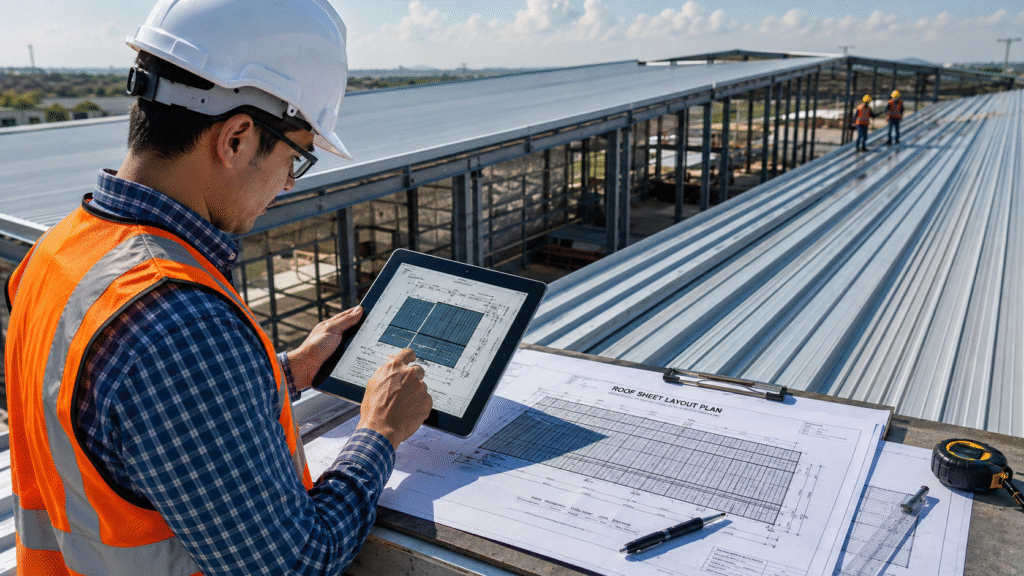
Why Accurate Roofing Sheet Calculation Matters
Before placing an order, it is important to estimate your roofing requirements accurately.
Proper calculation helps:
- Reduce material wastage
- Control project costs
- Prevent construction delays
- Improve project planning
- Ensure complete roof coverage
- Avoid unnecessary transportation expenses
A well-planned roofing project starts with precise measurements.
Key Measurements Required Before Calculation
Before calculating roofing sheets, gather the following information:
1. Roof Length
Measure the total horizontal length of the roof.
Example:
- Roof Length = 30 meters
2. Roof Width
Measure the width from one side of the roof to the other.
Example:
- Roof Width = 20 meters
3. Roof Slope
Sloped roofs require more roofing material than flat roofs because the actual surface area increases.
Steeper roofs generally require additional sheets.
4. Roofing Sheet Dimensions
Know the effective coverage area of each roofing sheet.
For example:
- Sheet Width = 1 meter
- Sheet Length = 6 meters
However, effective coverage is often less because sheets overlap during installation.
Understanding Effective Coverage Width
Many buyers make the mistake of calculating based on the total sheet width.
In reality, roofing sheets overlap to prevent leakage.
For example:
| Specification | Measurement |
|---|---|
| Actual Sheet Width | 1.0 Meter |
| Side Overlap | 0.1 Meter |
| Effective Width | 0.9 Meter |
Always use effective coverage width rather than actual sheet width.
Step-by-Step Formula for Roofing Sheet Calculation
Step 1: Calculate Total Roof Area
Formula:
Roof Area = Roof Length × Roof Width
Example
Roof Length = 30 meters
Roof Width = 20 meters
Roof Area = 30 × 20
Roof Area = 600 square meters
Step 2: Calculate Effective Sheet Coverage Area
Formula:
Sheet Coverage Area = Effective Width × Sheet Length
Example
Effective Width = 0.9 meters
Sheet Length = 6 meters
Coverage Area = 0.9 × 6
Coverage Area = 5.4 square meters
Step 3: Calculate Number of Roofing Sheets Required
Formula:
Number of Sheets = Total Roof Area ÷ Sheet Coverage Area
Example
600 ÷ 5.4 = 111.11
Round up to:
112 roofing sheets
Since roofing sheets cannot be purchased in fractions, always round up to the next whole number.
Quick Roofing Sheet Calculation Example
Let’s consider a warehouse project.
Project Details
- Roof Length: 40 meters
- Roof Width: 25 meters
- Roof Area: 1,000 square meters
- Effective Sheet Width: 0.95 meters
- Sheet Length: 8 meters
Sheet Coverage Area
0.95 × 8 = 7.6 square meters
Roofing Sheets Needed
1,000 ÷ 7.6 = 131.57
Required Quantity:
132 Roofing Sheets
Adding a safety margin of 5%:
132 + 7 sheets
Final Order Quantity:
139 Roofing Sheets
Factors That Affect Roofing Sheet Quantity
Roof Design Complexity
Simple rectangular roofs require fewer calculations.
Complex roof designs with:
- Valleys
- Ridges
- Curves
- Multiple slopes
often need additional material.
Overlapping Requirements
Greater overlap improves weather protection but reduces effective coverage area.
This increases the total number of sheets required.
Roof Pitch
Steeper roofs have larger surface areas than flat roofs.
As roof pitch increases:
- Material requirements increase
- Installation complexity increases
Material Wastage
Cutting and fitting can generate unavoidable waste.
Most roofing professionals recommend adding:
- 5% extra for simple roofs
- 10% extra for complex roofs
Common Mistakes When Calculating Roofing Sheets
Ignoring Overlaps
Using actual sheet dimensions instead of effective coverage can result in shortages.
Not Accounting for Roof Slope
Many buyers calculate only the building footprint rather than the actual roof surface area.
Forgetting Waste Allowance
Minor cutting losses occur on almost every project.
Adding extra material helps avoid interruptions.
Ordering Exact Quantities
Unexpected installation adjustments may require additional sheets.
A small buffer can save significant time and transportation costs.
Roofing Sheet Estimation Table
| Roof Area | Approximate Roofing Sheets Required* |
|---|---|
| 100 sq. m | 19 Sheets |
| 250 sq. m | 47 Sheets |
| 500 sq. m | 93 Sheets |
| 750 sq. m | 139 Sheets |
| 1,000 sq. m | 186 Sheets |
*Based on a roofing sheet with approximately 5.4 sq. m effective coverage area.
Actual requirements vary based on sheet dimensions and overlap specifications.
Benefits of Professional Roofing Estimation
Professional roofing estimation offers several advantages:
- Accurate quantity planning
- Reduced material wastage
- Better project budgeting
- Faster installation
- Lower risk of shortages
- Improved structural planning
For large industrial projects, professional measurement is highly recommended.
Why Choose Sri Raja Rajeswari modular Industries?
At Sri Raja Rajeswari modular Industries, we provide more than just roofing materials—we help customers plan their roofing projects efficiently.
Our services include:
- High-quality roofing sheets
- Expert quantity estimation
- Customized roofing solutions
- Technical support
- Competitive pricing
- Timely delivery
Whether you are constructing a warehouse, factory, industrial shed, or commercial building, our team can help determine the right roofing sheet quantity for your project.
Conclusion
Calculating the number of roofing sheets needed for a project is essential for controlling costs, minimizing waste, and ensuring smooth construction.
The basic process involves:
- Measuring the roof area
- Determining effective sheet coverage
- Dividing roof area by sheet coverage
- Adding a safety margin for waste and adjustments
Accurate planning helps avoid delays and unnecessary expenses while ensuring complete roof protection.
At Sri Raja Rajeswari Industries, we assist customers in selecting the right roofing materials and estimating precise quantities for projects of all sizes.
Frequently Asked Questions (FAQs)
1.How do I calculate roofing sheets for a shed?
Measure the roof area, determine the effective sheet coverage area, and divide the total roof area by the coverage area of one sheet.
2.Should I include overlap when calculating roofing sheets?
Yes. Always calculate using effective coverage width after overlap, not the actual sheet width.
3.How much extra roofing material should I order?
Most professionals recommend adding 5% to 10% extra material for cutting, waste, and unexpected adjustments.
4.Does roof slope affect roofing sheet quantity?
Yes. Sloped roofs have larger surface areas than flat roofs and usually require more roofing material.
5.Can roofing sheets be cut to size?
Yes. Roofing sheets can be customized and cut according to project specifications.
6.Who can help estimate roofing sheet requirements?
Professional roofing suppliers like Sri Raja Rajeswari Modular Industries can help calculate accurate material requirements based on your project dimensions.