
Factory owners plan around them. Shift supervisors adjust targets. Workers pace themselves. Very few pause to question whether the building itself is part of the problem.
In many medium to large industrial units—from fabrication sheds on the outskirts of Hyderabad to processing plants along the Vijayawada–Guntur belt—roofing is still viewed as a one-time construction decision. Yet, as this real operational experience shows, roofing directly influences daily output, workforce stability, and energy costs.
This article explains, in practical terms, how insulated roofing improved productivity in an industrial unit operating in a high-heat South Indian climate, and why more factory managers are now rethinking their roofing choices.
The Ground-Level Problem: Heat Inside the Shed
What Was Actually Happening on the Shop Floor
The industrial unit discussed here operated out of a conventional metal-roofed shed, common across industrial areas in Telangana. By late morning—especially between March and June—the internal temperature would rise sharply.
Supervisors began noticing patterns that did not show up clearly in reports:
- Output slowed after lunch hours
- Workers requested more water and short breaks
- Welding and fabrication work took longer in the afternoon
- Machines tripped more frequently due to heat buildup
None of these issues caused a shutdown. But together, they quietly reduced daily efficiency.
Why Traditional Roofing Couldn’t Cope
Standard metal roofing absorbs and transfers heat quickly. In large-span industrial sheds with limited insulation, this creates a greenhouse effect. Ventilation helped marginally, but it did not address the core issue—continuous heat ingress from the roof.
Rethinking the Approach: Fixing the Cause, Not the Symptoms
Why Cooling Alone Was Not the Answer
The management initially explored adding more exhaust fans and spot coolers. However, energy costs were already rising, and the results were inconsistent. Cooling air under a heat-absorbing roof proved inefficient.
The discussion shifted to whether the shed itself could be made thermally stable.
Evaluating Insulated Roofing for Local Conditions
Insulated roofing was considered with specific regional realities in mind:
- Prolonged summer heat in Telangana and coastal Andhra regions
- High solar exposure on large roof surfaces
- Continuous production schedules with minimal downtime tolerance
Hema Industries Group (SRRModules) was brought in to study the structure and operating pattern. Instead of a generic recommendation, the focus was on how the roof behaved during peak working hours.

Installation Planning Without Stopping Production
For factories running tight delivery schedules, downtime is not an option. The roofing upgrade was therefore planned in stages.
Key steps included:
- Assessing existing purlins and load capacity
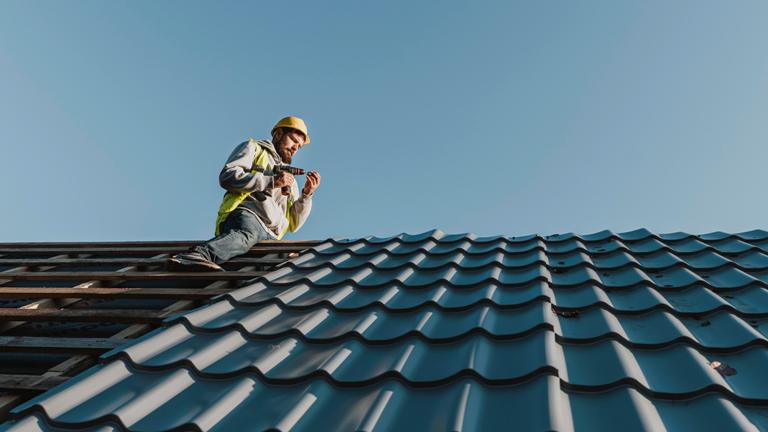
- Using pre-fabricated insulated panels to speed up installation
- Scheduling work during non-peak production hours
This phased execution allowed production to continue while sections of the roof were upgraded.

Changes Observed After Installation
A More Stable Working Environment
Within weeks, the difference was evident on the shop floor. While outside temperatures remained unchanged, the internal heat buildup reduced noticeably. Afternoon working conditions became more tolerable.
Workers reported less exhaustion, particularly during longer shifts common in industrial units around Hyderabad’s outskirts and industrial estates in Andhra Pradesh.
Consistency in Output
One of the most valuable outcomes was consistency. With reduced heat stress:
- Afternoon productivity matched morning levels more closely
- Supervisors spent less time managing fatigue-related slowdowns
- Daily production planning became more reliable
This stability mattered more than short-term gains, especially for units supplying time-bound orders.
Controlled Energy Usage
With less heat entering the shed, reliance on temporary cooling measures reduced. Over subsequent billing cycles, energy consumption stabilized—a significant benefit in regions where power costs fluctuate.
Reduced Stress on Equipment
Lower ambient temperatures meant machines operated within safer thermal limits. Maintenance teams observed fewer heat-related interruptions, especially during peak summer weeks.

Business Impact: What Management Actually Gained
From a leadership perspective, the benefits were practical rather than theoretical.
Operational Improvements
- Better workforce attendance during summer months
- Fewer production slowdowns linked to heat
- More predictable energy expenses
- Improved compliance with workplace comfort norms
Long-Term Value
While insulated roofing involves higher initial investment compared to standard sheets, the return was seen through improved output consistency and lower operating stress. For this unit, the upgrade aligned infrastructure with business performance.
Why Insulated Roofing Is Becoming Relevant in South India
Industrial growth in Telangana and Andhra Pradesh has accelerated, but climatic conditions remain challenging. As factories expand capacity, heat-resistant and insulated roofing solutions are becoming part of long-term planning rather than reactive fixes.
Insulated roofing supports:
- Sustainable factory operations
- Employee well-being in extreme climates
- Energy efficiency goals
Hema Industries Group (SRRModules): A Practical, Site-Driven Approach
Hema Industries Group (SRRModules) works closely with factory teams to understand actual operating conditions. Recommendations are based on how a unit functions day to day—not just on drawings or specifications.
This approach ensures roofing systems perform reliably under Indian industrial conditions, particularly in high-heat regions.
Key Takeaway for Factory Owners and Project Managers
This experience highlights a simple but often overlooked truth: productivity is influenced by the building envelope as much as by manpower and machinery.
For industrial units in Telangana, Andhra Pradesh, and similar climates, insulated roofing is no longer just an upgrade. It is a practical step toward stable productivity, controlled costs, and a safer working environment.
Frequently Asked Questions (FAQs)
How does insulated roofing help factories in hot regions like Telangana?
By limiting heat transfer from the roof, insulated roofing reduces internal temperature rise, improving worker comfort and production stability.
Can insulated roofing be installed on existing industrial sheds?
Yes. With proper structural assessment and phased planning, insulated roofing can be retrofitted with minimal disruption.
Does insulated roofing reduce power consumption in factories?
Reduced heat ingress lowers dependence on fans and cooling systems, helping stabilize electricity usage.
Is insulated roofing suitable for continuous-operation units?
Yes. Installation can be planned in stages, allowing operations to continue during the upgrade.
Which industries benefit most from insulated roofing?
Manufacturing, fabrication, processing, and warehousing units operating in high-temperature environments benefit significantly.